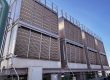


Cooling towers are made to work all the time and without fail. The tower has big fans that circulate air through it, motors that run for hours at a time, and parts that are always exposed to heat and moisture. One little mistake can quickly become a big problem when there is so much activity. That’s when a vibration switch comes in handy.
If you run or take care of a cooling tower, knowing how a vibration switch works will help you keep your equipment safe and avoid expensive downtime.
Why It’s Important to Monitor Vibration
Every fan assembly in a cooling tower makes some noise. That’s normal. Excessive vibration is not natural. It might be caused by things like imbalanced fan blades, worn bearings, misalignment, loose hardware, or structural damage.
If you don’t do something about it, too much vibration might cause major problems. Fan shafts can break. Bearings can become stuck. Motors can stop working. Structural parts may be harmed in really bad situations. A vibration switch is a safety feature that shuts the system down before major harm may happen.
What a Vibration Switch Really Does
A vibration switch is a safety tool that may find unusual amounts of vibration in moving parts. In a cooling tower, it is usually positioned on or near the fan assembly or the gearbox housing.
There is a detecting mechanism inside the switch that reacts to movement. The switch turns on when the vibration goes over a certain level. This step stops the control circuit and turns off the fan motor.
To put it simply, the switch turns off power to protect the equipment if the vibration is too strong.
How the Internal Mechanism Works
A spring-loaded mass or magnetic sensor is what most mechanical vibration switches use to work. The internal mass moves in a certain way under typical conditions. When the vibration goes over the measured level, the mass moves sufficiently to make an electrical contact.
Depending on how the system is set up, an electrical contact either opens or shuts the circuit. In most cooling tower uses, it stops the engine by opening the circuit.
Some modern vibration switches use electronic sensors instead of purely mechanical components. These versions could include options that let you change the sensitivity and more accurate calibration, but the essential goal is still the same. Shut off the system if it detects too much movement.
Where to Put Vibration Switches
Vibration switches are often installed on the fan deck, close to the gearbox, or directly on the motor support structure in cooling towers. Placement is really crucial. The switch has to be put in a place where it can properly detect unusual vibrations without being affected by regular movement.
The switch is set up to work with the right amount of vibration for that tower type during installation. If the threshold is set too low, it might cause annoying shutdowns. If you set it too high, it won’t protect you as well.
Why It’s Important to Test Regularly
A vibration switch, like any other safety device, should be checked from time to time. Maintenance teams frequently do functional tests to make sure the switch trips and resets appropriately.
Keeping Your Cooling Tower Safe
Even though a vibration switch is modest, it is quite important for keeping your cooling tower from breaking down completely. It helps keep costs down and downtime to a minimum by detecting unusual vibrations and shutting down automatically.
Universal Tower Parts provides the parts and knowledge to assist you find a new vibration switch or other parts for your cooling tower, go to universaltowerparts.com.
If you are interested in purchasing Vibration Switches in Phoenix or anywhere else in the Valley call us today at 602-997-0403.
Universal Tower Parts In Phoenix, AZ
Universal Tower Parts provides stainless steel and galvanized options, welded and gasketed, direct, gear reducer and belt drive units, with efficient Jedair fans, and Jedair low noise fans. Strainers, fan guards and louvers are well constructed, and designed to operate efficiently as they perform their function. Cool Core drift eliminators and fill are made by Universal Tower Parts expressly for our towers.