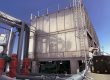

An adiabatic cooler is a heat-rejection device that employs evaporation to make cooling more efficient and consumes less water than a regular cooling tower. More and more businesses and factories are using these systems since they save energy, water, and time on repairs.
To understand how an adiabatic cooler works, it helps to know what the word “adiabatic” means. Adiabatic cooling is the process of reducing the temperature of air by evaporating water, without adding or taking away heat from an outside source. This technique makes equipment work better, especially in hot weather or when the temperature is at its highest.
How an adiabatic cooler works
Most of the time, an adiabatic cooler works in two steps. The first step is that warm process fluid flows via a coil or heat exchanger inside the device. Fans also pull or push air across the coils, much like a dry cooler does.
When further cooling is needed, water is added to chill the air before it comes in. People normally accomplish this with wet pads or a tiny misting system. The air cools down before it reaches the coils because the water evaporates. This makes heat transfer better and cooling performance better.
Adiabatic coolers use a lot less water than typical cooling towers because they only utilize water when they need to. typical cooling towers work by constantly evaporating water.
Advantages of Adiabatic Coolers
One of the best things about an adiabatic cooler is that it uses less water. Many places want to save water or follow environmental rules, and adiabatic systems can use a lot less water than open cooling towers.
Another good thing is that they don’t need as much upkeep. Because the process fluid stays in a closed loop and the system doesn’t need to be wet all the time, there is less chance of scale, corrosion, and biological development. This can cut down on the requirement for chemical treatment and make it easier to keep up with servicing.
Another big plus is that it saves energy. Adiabatic coolers let equipment work at lower temperatures without needing extra mechanical refrigeration by chilling the air that enters the system first. This can decrease the cost of running things, especially in places with hot summers.
Adiabatic Coolers vs. Cooling Towers
Both systems get rid of heat, but they do so in different ways. To get the best cooling, cooling towers need water to evaporate directly, which means they can get very near to the ambient wet-bulb temperature. Adiabatic coolers, on the other hand, mostly work as dry systems and only utilize water when they need more cooling power.
Because of this difference, adiabatic coolers are great for places where saving water, keeping things clean, and needing less maintenance are all vital. Cooling towers may still be the best choice for places with very high heat loads or those that need the best cooling all year round.
Common Uses
Adiabatic coolers are utilized a lot in factories, data centers, HVAC systems, and food processing plants. This technology may help any business that requires dependable cooling yet wants to use less water and do less maintenance.
They are also a fantastic choice for improving older cooling systems because they can frequently be added to existing systems with the appropriate design and parts.
How to Keep Cooling Systems Working Well
Your building’s cooling towers, fluid coolers, or adiabatic systems all need to be properly maintained and have high-quality parts in order to last a long time and work well. Universal Tower Parts sells replacement parts, accessories, and professional advice to help keep industrial cooling equipment working well. Get in touch with the team now to get the best options for your system.
Universal Tower Parts In Phoenix, AZ
Universal Tower Parts provides stainless steel and galvanized options, welded and gasketed, direct, gear reducer and belt drive units, with efficient Jedair fans, and Jedair low noise fans. Strainers, fan guards and louvers are well constructed, and designed to operate efficiently as they perform their function. Cool Core drift eliminators and fill are made by Universal Tower Parts expressly for our towers.